column


We investigated the animals in Kitajukken River!
- Introducing the animals
- Research and studies
Kitajukkengawa is a river that flows right in front of Sumida Aquarium. Originally one of the irrigation channels built during the Edo period, it connects to the Sumida River to the west and the Kyu-Nakagawa River to the east, with a total length of approximately 3.24 km.
Currently, the river is used as a park and a dock, and in the summer it is a place where local people can relax and enjoy the waterside, whether they are fishing for Japanese goby, taking a walk along the river, or taking a break on a bench. This time, the animal care staff investigated what kind of animals live in the Kitajukken River.
Environment of the Kitajukken River
A total of 27 surveys were conducted between June and September 2021 targeting animals living in aquatic environments. The survey site this time was approximately 450m of the bank of Oshinari Park* on the Kitajukken River. animals were collected and surveyed using nets and fishing.
*Oshinari Park: Located in front of Tokyo Skytree Town, this waterfront park stretches between Tobu Bridge and Keisei Bridge. The park has walking paths and a waterside terrace, and is lit up at night.

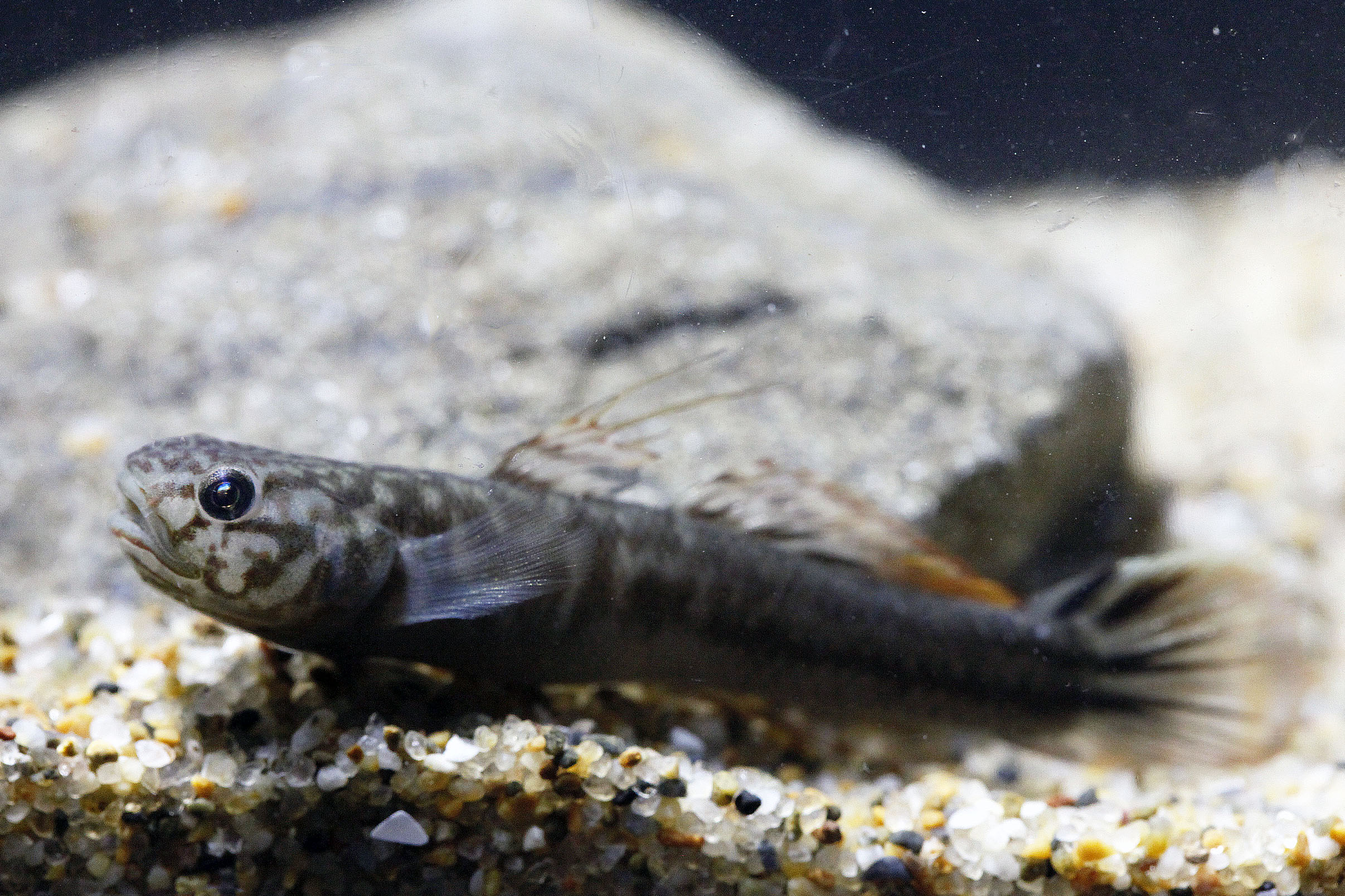
The bank is covered with concrete, and in sunny spots, algae grows, with mussels and barnacles attached in some places. Fish can be seen near the installed fountain, and animals can be found hiding in the gaps. A snake-shaped structure made of a wire mesh cage filled with stones and soil has been installed, and gobies and other animals live nearby. There are also crabs among the emergent plants growing on top of the snake! We were able to see the various animals living there.
We also collected water samples from the river to investigate its water quality, and found that it was brackish (low-salinity water), a mixture of freshwater and seawater. Although the river water was within the environmental standards set by the Ministry of the Environment, its transparency was low, and there were very few days when the riverbed was visible.
Water quality is a very important condition for animals living near water. At first glance, low water transparency may not seem like a good environment, but this survey confirmed that Kitajukkengawa is home to many animals.

animals seen during the survey
During this survey, we were able to identify a total of 42 species of animals. Seven of these were precious creatures designated as wildlife of important conservation importance by the Tokyo Metropolitan Government. However, we also identified invasive species that are not supposed to live here in their natural habitat.
*The Red List is a list of wildlife species that are at risk of extinction. It is compiled globally by the International Union for Nature (IUCN), and in Japan by the Ministry of the Environment, prefectures, NGOs, academic societies, and other organizations.
What we can do to protect the nature around us
Through this survey, we discovered that the Kitajukken River, which flows close to Sumida Aquarium, is actually home to a variety of living animals. While a wide variety of animals, including rare species, can be seen, there is a lot of garbage floating on the water's surface, making it not an ideal environment for living animals. We hope that our exhibits will inspire people to think about what they can do for the nature around them and the animals that live there.
In order to become more closely connected to the local community, Sumida Aquarium would like to go beyond the aquarium and engage in exchanges with local elementary schools and activities that consider the nature around us. Furthermore, we hope to not only utilize our knowledge of animals and protect the environment, but also to communicate the appeal of the animals that have taken root in our local Tokyo area, thereby becoming a bridge that brings local people and animals closer together.
To realize Sumida Aquarium's goal of "living with an aquarium," we also value the coexistence of ourselves and the animals living in the local natural environment. We would like to work together with everyone to make the aquarium a part of life and a place like a park for the local community.
Column List